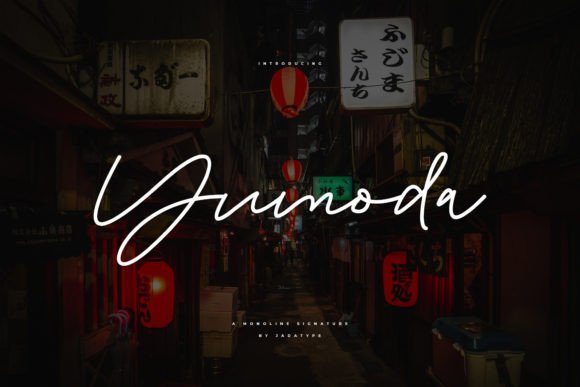
Yumoda: Crafting Visual Stories with a Stylish Monoline Script
There’s a particular kind of project that demands a certain human touch. It’s the logo for a new boutique, the header for a wedding invitation, the text on a artisanal coffee label. In these moments, a standard sans serif font feels too clinical, and a traditional serif font too formal. You need something that feels personal, yet polished. This is the space where a typeface like Yumoda excels. As a stylish script monoline, it strikes a balance between handwritten authenticity and modern design clarity, making it a versatile design asset for a wide range of creative professionals.
The Anatomy of a Modern Script
At its core, Yumoda is a script font characterized by its consistent, single-weight stroke—a defining feature of monoline design. This uniformity gives it a clean, contemporary feel that avoids the sometimes fussy or overly ornate look of traditional calligraphy scripts. The letterforms connect fluidly, mimicking the natural flow of a pen, yet they maintain a legibility that is crucial for brand identity and editorial design. Its personality is approachable, creative, and subtly elegant. It doesn’t scream for attention; instead, it draws the viewer in with its confident, handcrafted charm. This makes it an excellent creative font for projects aiming to convey authenticity without sacrificing professionalism.
The true strength of Yumoda lies in its adaptability. It functions beautifully as a display font for headlines and logos, where its stylistic flair can set the tone for an entire design. However, its consistent weight also allows it to work in shorter blocks of text, such as pull quotes or subheadings in packaging design or social media graphics. When considering modern typography, the trend is toward fonts that carry emotional weight. Yumoda delivers this by offering a human, handwritten quality that resonates in digital spaces often dominated by sterile, geometric typefaces.
Practical Applications: From Branding to Personal Projects
For entrepreneurs and small business owners, choosing a premium font like Yumoda is an investment in their brand’s visual language. It’s particularly effective for businesses in the lifestyle, wellness, beauty, food, and creative service industries. Imagine it on a café menu, a boutique clothing tag, or the logo for a photography studio. It immediately communicates a sense of care, creativity, and personal connection. In logo design, it can form the primary wordmark or serve as a complementary accent to a simpler sans serif font, creating a dynamic and balanced font pairing.
Beyond commercial use, its applications are vast. Content creators and bloggers can use Yumoda to add a distinctive header to their websites or a signature look to their social media graphics. Publishers might find it perfect for chapter titles in a cookbook or a lifestyle book. Crafters and hobbyists can elevate their DIY projects, from custom invitations to personalized gifts. The key is matching the font’s personality to the project’s message. Yumoda says, “This was made with thought and care,” making it ideal for any project where a personal narrative is central.
Making It Work: Strategy and Execution
Integrating a script font like Yumoda into your projects requires a bit of strategic thinking to maximize its impact. First, always consider readability. While it’s highly legible for its category, script fonts are best used for short, impactful text. Reserve it for headlines, logos, and accent text, and pair it with a clean, neutral font for body copy. A classic combination is Yumoda with a simple sans serif font like Montserrat or Lato. This creates a clear visual hierarchy, guiding the reader’s eye and ensuring the overall design remains accessible and professional.
Before committing to any commercial font, test it thoroughly. Type out your specific project name or key phrases to see how the letterforms interact. Check the spacing and kerning in your design software. Review the full character set of Yumoda; a well-designed font will include a full range of punctuation, numerals, and often stylistic alternates or ligatures that can add unique flair. Finally, understand the licensing. Most premium fonts come with clear commercial licensing terms. Ensure the license covers your intended use—whether it’s for a client’s logo, printed merchandise, or digital templates—to avoid legal issues down the line.
Ultimately, the goal of using a typeface like Yumoda is to foster a stronger connection with your audience. It influences brand perception by injecting personality and warmth. It aids in recognition by providing a distinctive visual signature. And it enhances audience engagement by making communications feel more personal and less corporate. In a world saturated with generic visuals, a thoughtfully chosen script font can be the detail that makes your brand, your project, or your message stand out and feel genuinely human.